
The Short Answer
Grinding usually means worn-out rollers or bearings. Squealing is almost always a lubrication problem, sometimes paired with track misalignment. Popping points to spring stress or a door panel flexing under pressure. Rattling is loose hardware shaking loose from vibration, wind, or worn track components. Each of these has a different fix, and in Highlands County's heat, humidity, and storm cycles, they show up faster than they would in a drier climate.
Grinding: Metal-on-Metal Means Something's Worn
Grinding usually happens as the door travels, especially near the top of its path where the rollers carry the most load. It sounds like metal scraping metal, and it often gets worse over a few weeks rather than appearing overnight.
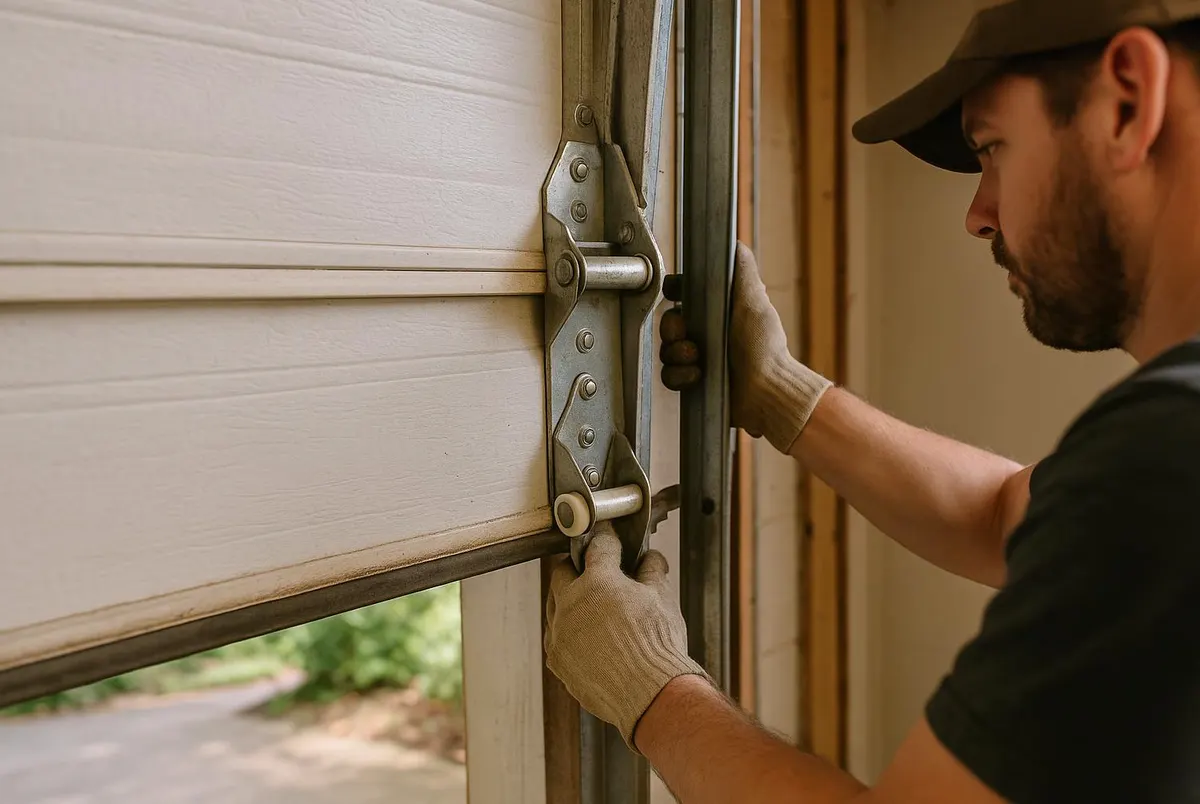
- Rollers first. A technician checks the rollers before anything else. Nylon rollers are common because they're quieter than steel, but constant heat and UV exposure on an unshaded garage can dry them out and crack the nylon jacket over time. Once that happens, the metal core grinds against the track. Replacement is straightforward and usually done in a single visit.
- Bearing plates next. If the rollers look fine, the bearing plates at the top of the track (where the horizontal and vertical track sections meet) get inspected. Worn bearings let the roller wobble, which creates a grinding sound under load.
- Opener gears last. If the noise is coming from the motor unit rather than the track, a worn drive gear inside the opener is the likely cause. This is a more involved repair and sometimes signals it's time to discuss opener replacement rather than another repair.
Squealing: Almost Always a Lubrication Issue
Squealing is a higher-pitched, sharper sound, usually happening at specific points in the door's travel rather than the whole way up or down.
- Lubrication is checked first. Hinges, rollers, and the torsion spring itself all need a light coat of garage-door-specific lubricant. Humidity speeds up how fast factory lubrication wears off metal parts, so doors here often need re-lubrication more often than the manual suggests. This is a five-minute fix if that's all it is.
- Hinge wear is next. If lubrication doesn't quiet things down, a technician checks whether the hinges themselves are worn or bent, which lets panels rub against each other.
- Track alignment last. A track that's shifted slightly out of parallel will squeal as rollers fight their way through the tight spot. This often traces back to a door that took a hit from wind-driven debris during a storm, even a minor one that didn't seem to cause damage at the time.
Popping: A Sign of Stress, Not Just Noise
Popping is a loud bang or a series of sharp cracks, often happening as the door opens or closes rather than continuously.
- Spring tension is checked first. A torsion spring under the wrong tension, or one that's corroding from inside out due to moisture exposure, can pop as it flexes. This is the component that does almost all the lifting work on the door, and it's under very high stress even when everything's working correctly.
- Spring condition is checked next. Rust buildup from humid air and occasional condensation inside the garage weakens the coil structure gradually, long before the spring actually fails. Popping is often the warning sign that shows up before a full snap.
- Panel flex is checked last. On older wood or composite doors, humidity swelling can cause a panel to bind slightly against the frame and release with a pop as it moves through. This is more of a comfort and noise issue than a safety one, but it's worth addressing before the swelling gets worse during the wetter months.
Rattling: Usually Loose, Not Broken
Rattling is a looser, more scattered sound, often most noticeable right as the door starts moving or stops.
- Hardware is checked first. Brackets, hinges, and track bolts work themselves loose over time from daily vibration, and wind load during storm season accelerates this. A full hardware check-and-tighten often solves rattling on its own.
- Rollers and track wear are checked next. Worn rollers that no longer fit snugly in the track will rattle as they travel, especially at the curved sections.
- Chain and opener components are checked last. On chain-drive openers, a loose or worn chain will rattle against the rail. Tightening or replacing it usually resolves this quickly.
When to Call Avon Park Garage Door Service
If tightening hardware or applying lubricant doesn't quiet things down within a day or two, or if the noise is paired with the door hesitating, reversing, or moving unevenly, it's time to call. Grinding and popping in particular shouldn't wait, since they often point to components under real mechanical stress. Our Garage Door Cable & Roller Repair service covers most grinding and rattling issues at their source, and our Garage Door Maintenance & Tune-Up visit catches lubrication, hardware, and alignment problems before they turn into a bigger repair. We also handle the spring-related causes behind popping noises directly, since that's not a job to troubleshoot solo.
If your garage door in Avon Park, Sebring, or anywhere else in Highlands County has started making noise it didn't used to make, call Avon Park Garage Door Service and we'll get a technician out to track down the cause before it turns into a breakdown.