
Rule of thumb: in Highlands County, a garage door that won't budge on a cold morning is almost never literally frozen to the slab — it's dragging because of moisture, old grease, or rust. The exception is the rare hard freeze night, usually in December or January, when condensation on the concrete apron can bond the rubber bottom seal to the slab overnight. That's the one scenario where "frozen" is the right word. Everything else that feels like freezing is really humidity doing slow damage to hardware that was fine in October.
What You'll Notice First
- The door hesitates for a second or two before it starts moving, then jerks into motion.
- The opener motor sounds like it's working harder than usual, or it stalls and reverses.
- The rubber seal along the bottom edge looks stuck flat against the concrete, with a thin line of frost or dew where it meets the slab.
- Rollers squeal or grind instead of rolling smoothly through the track.
- The door feels heavier to lift by hand than it did a few weeks ago.
None of these symptoms tell you the cause by themselves — that's why a technician works through them in a specific order, starting with the simplest explanation first.
1. Check the Bottom Seal First
On the handful of nights each winter when temperatures near Avon Park drop into the high 30s or low 40s, overnight condensation on a concrete driveway can freeze into a thin glaze. If the rubber weatherstrip along the bottom of the door was sitting in a puddle from the previous day's rain, it can bond lightly to that glaze. Forcing the opener in that state strains the drive gear and can snap the seal. The fix is simple: don't hit the button repeatedly. Gently pry the seal free by hand, then run a silicone-based (not petroleum) lubricant along the seal so it stops holding water against the slab.
2. Look at Track and Roller Lubrication
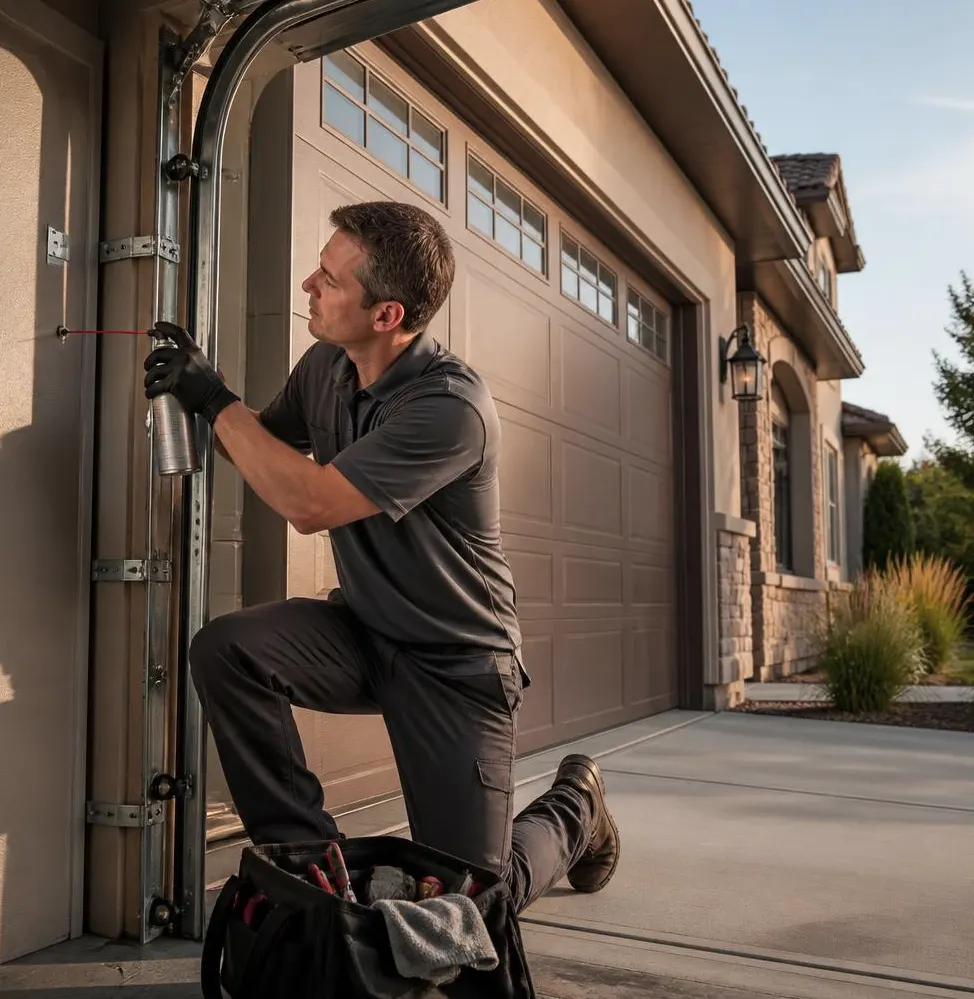
If the seal isn't the problem, the next stop is the lubricant on the tracks and roller stems. Florida humidity doesn't just evaporate overnight — it thickens standard grease over a season of afternoon downpours and muggy nights, turning it gummy and good at collecting dust and pollen. That thickened grease is what actually slows the door down, not cold air. A technician cleans the tracks with a rag and mild degreaser, then reapplies a lithium-based or silicone garage door lubricant to the rollers, hinges, and springs — never the track itself, which should stay dry so the rollers can grip it.
3. Inspect for Rust on Tracks, Hinges, and Rollers
This is where the humidity cycle really shows up. Warm, wet afternoons followed by cooler nights create condensation on steel hardware, and that daily swing is enough to start surface rust on tracks, hinge pins, and roller bearings — faster if the home is anywhere near brackish water or salt-tinged air. Rust adds friction and pitting that no amount of lubricant fully solves. The fix depends on severity: light surface rust gets wire-brushed and treated with a rust inhibitor; rollers with visible pitting or flat spots get replaced, since a worn roller will keep binding no matter how clean the track is.
4. Check Spring Tension and Balance
Metal torsion springs contract slightly as temperatures drop, which can shift a door's balance by a small but noticeable amount — a door that was balanced in October can feel a touch heavier or lighter in January. This is diagnosed with a balance test, not by eye: disconnect the opener, lift the door halfway by hand, and see whether it holds its position or drifts. If it drifts, the spring tension needs adjusting. This step is listed last for a reason — it's also the most dangerous to handle without the right bars and clamps, since torsion springs store enough force to cause serious injury if they let go.
5. Rule Out Opener Sensor and Limit Issues
Last on the list, because it's the least common cause: the photo-eye safety sensors near the bottom of the tracks can fog up with condensation on humid mornings, making the opener think something is blocking the door and causing it to reverse or refuse to close. A quick wipe-down of both sensor lenses usually solves it. If the opener's travel limits have drifted, that's a separate adjustment inside the opener unit itself.
When to Call Avon Park Garage Door Service
If you've wiped the sensors and lubricated the obvious spots and the door still drags, hesitates, or feels unbalanced, it's time to stop troubleshooting and call. Our team handles Garage Door Maintenance & Tune-Up visits that cover exactly this seasonal wear — cleaning, lubricating, and rust-proofing hardware before it gets worse — and Garage Door Cable & Roller Repair for tracks and rollers that have already pitted or bent. We serve Avon Park, Sebring, Lake Placid, and the rest of Highlands County, and we show up fast when a door won't move.
Don't wait for a stuck door to turn into a stripped opener or a snapped cable. Call Avon Park Garage Door Service today and get it moving smoothly again before the next cold snap.